#ai
15 posts

Cuộc thuê lại vĩ đại: làn sóng sa thải AI 2026 chảy về Việt Nam — qua một trong hai cửa
Báo chí phương Tây bán nỗi sợ AI cướp việc kỹ sư, nhưng dữ liệu 2026 kể chuyện khác: một phần lớn số người bị cắt đang được thuê lại ngầm ở nước ngoài, và Việt Nam là điểm đến hàng đầu. Đây là cơ hội lớn nhất một thập kỷ của tech Việt — nhưng nó đến qua hai cửa, và chọn sai cửa thì 18 tháng nữa bị AI nuốt.

Thứ lấy việc của bạn không phải AI. Là sự đứng yên của bạn
Trong tiểu thuyết Hum, May mất việc không phải vì làm kém — mà vì làm quá giỏi, dạy máy đến mức nó không cần cô nữa. Đó là cái bẫy "dạy để bị thay": càng thành thạo, dữ liệu để lại càng sạch, máy học càng nhanh. Lối thoát không phải tìm một kỹ năng AI không làm được — không có thứ đó — mà là chống hội tụ: liên tục rời vùng mình vừa thành thạo, khi còn đang đứng trên đỉnh, trước khi nó kịp bị mã hóa thành thứ sao chép được. Bài học cho cá nhân và tổ chức.

88% AI agent thất bại — và vì sao 12% còn lại có ROI 171%
Tám mươi tám phần trăm dự án AI agent doanh nghiệp không bao giờ lên được vận hành thực. Mười hai phần trăm còn lại có ROI trung bình 171%. Thị trường lưỡng cực: trung dung thua sạch, cam kết đủ sâu thắng đậm. Nhưng vì sao khe lại hẹp như vậy? Nghiên cứu MAST tại NeurIPS 2025 phân tích 1.642 dấu vết thực thi cho thấy 78,71% thất bại không phải vấn đề mô hình — là kiến trúc. METR cho thấy mô hình đang tăng tốc rất nhanh nhưng vẫn không cứu được. Kết luận cho founder Việt: lợi thế đến từ kiến trúc, không từ mô hình. Bài cụ thể hoá năm mảnh dịch còn trống và ba đặc điểm để tự tìm ngành đáng đặt cược.

Level 5 in the age of Altman and Musk: Does the humble CEO still make sense?
Collins named what he observed incorrectly. "Humility" is really *integrity* — and this isn't a semantic issue. With renaming, Level 5 becomes applicable to the AI era: a showy CEO can still be Level 5 if they have integrity; a CEO who looks humble but isn't consistent with truth isn't.

Redefining great: When Collins measured trains, the AI era needs to measure rockets
Of the 11 companies Collins called 'great,' a third have collapsed or lost serious value since the book came out. Why? And does his definition of 'great' — durable, 3x market outperformance over 15 years — still make sense when AI-native companies run on acceleration rather than steady velocity?

I haven't read Good to Great. Here's how I'm going to understand it.
I haven't read Good to Great and I don't intend to read it linearly. This is an experiment: reading books in the AI era — a few days of focused dialogue with AI, critique, distillation into blog posts, then listening back. Not lazy reading, but a new way to engage with knowledge for a time when there are too many books and too little time.

Anti-Convergence Design: Why Biology Doesn't Let You Stand Still — and What That Teaches AI Agents
Biology and AI engineering have independently arrived at the same design principle: no system that needs to adapt can be allowed to converge permanently. The mechanisms behind hedonic adaptation in humans mirror the mechanisms behind exploration schedules in agents. Lessons for how you build organizations, products, and yourself.

Habits, Weights, and the Brain as a Prediction Machine
Habits are not essence — they are weights, accumulated across tens of thousands of repetitions in your neural network. This essay places environment design, attention training, and cognitive reframing alongside Hebbian learning, predictive coding (Friston), constructed emotion (Barrett), and three distributed brain networks (DMN/SN/CEN) — to show why 'knowing but not doing' is not a bug, but a feature.

Company of One: New Structure, Sweet Trap, and Vietnam's Special Position
The company of one is no longer a lifestyle slogan. Some operators are running multi-million-dollar P&Ls alone with AI. But most of the supporting data is pre-AI, and the new configuration is shaping something not yet named: one person operating the scope of a multi-functional SME, while simultaneously birthing many new specialized roles. This essay is for Vietnamese tech operators considering leaving the CTO chair — a deep analysis of why this model is more viable than ever, why most who try will still fail, and what Vietnam's special position is.

When Software Production Is No Longer the Production of Code
The previous essay was about the fate of programmers. This one goes one step further: if writing code is just a small link in the chain of software production, what happens to the whole chain when AI swallows it link by link? And does the phrase 'software company' still mean anything?

When Nobody Understands Software Anymore
Reasoning to the end: when AI writes code better than humans and humans lose incentive to develop the skill, what happens to humanity's understanding of software? And if you don't want to drift with the current, what should you invest in?

The Cost of Intelligence: Why a High IQ Won't Save You from Yourself
Smart people don't motivated-reason less — they motivated-reason more elegantly. IQ is a multiplier: it scales intent in whichever direction intent is already pointing, right or wrong. On the four forms of motivated reasoning in high-IQ people and why every purely-internal solution fails.

The Invisible Ceiling: Why Most Engineers Stall at Mid-Level — and Why AI Is Making It Worse
Most engineers who plateau at mid-level for a decade aren't held back by intelligence, time, or opportunity. They're held back by their inability to look honestly at what they're missing. This isn't a technical problem — it's an integrity problem. And in the age of AI, this problem is becoming dangerous in ways we've never seen before.

Inception and the Art of Implanting Ideas in the Subconscious
Inception walks us step by step through how an idea gets planted in the subconscious: why you have to go into a dream, the rule of the simplest possible version, layered architecture, the Mr. Charles gambit, the safe scene, totems, and the lesson of Mal. Each of Cobb's techniques maps to a concrete design decision for anyone building AI agents — and a concrete ethical responsibility.
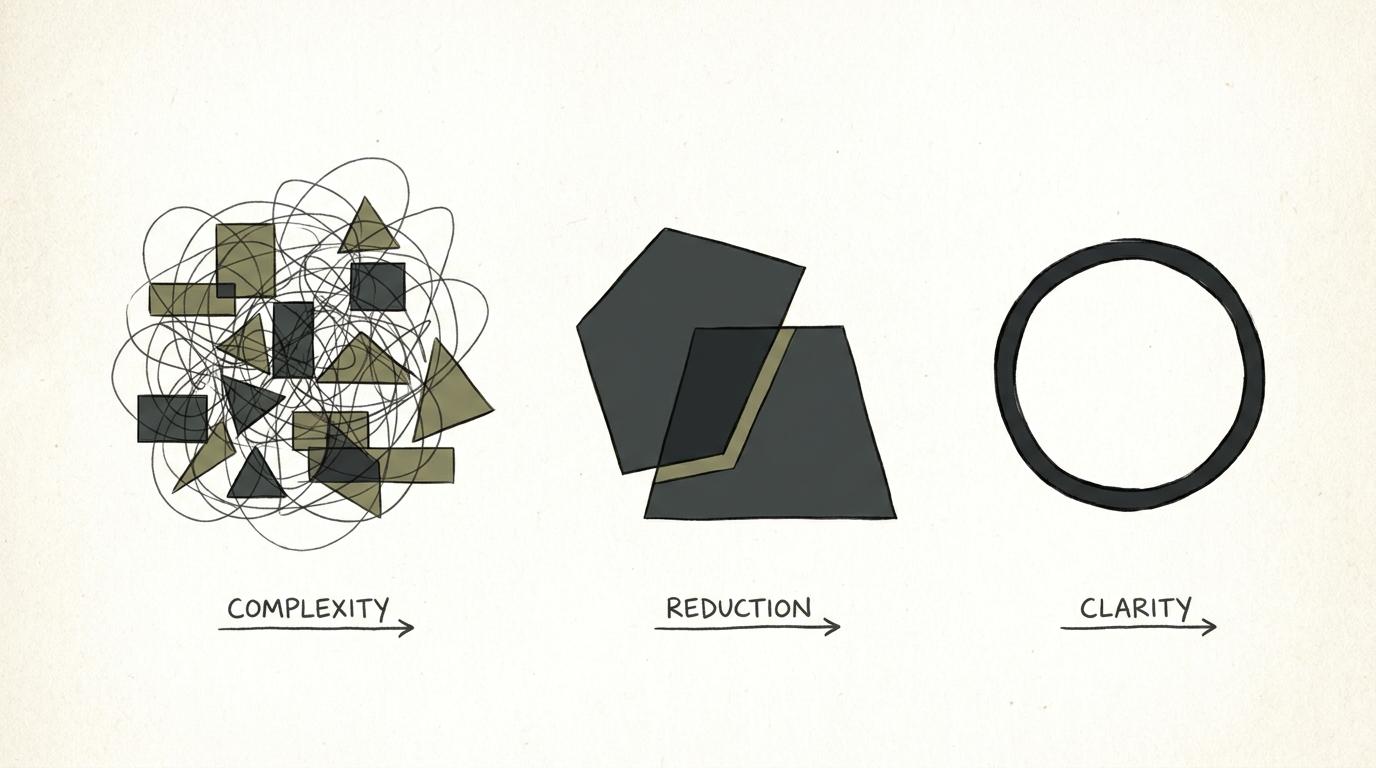
First principles, KISS, and why AI will reward engineers who think simply
Two old principles just became the most important skills of the next decade. AI amplifies good judgment and amplifies bad judgment. The difference is the ability to return to basic truths.